People
The Issue of Cultural Space in Mongolian Traditional Long Song
The Issue of Cultural Space in Mongolian Traditional Long Song
Volume 55 · June 2023
Volume 55 · June 2023
Long song is an exemplar of the Mongolian art of song and music. Mongolian long song has been inscribed on the UNESCO Representative List of the Intangible Cultural Heritage of Humanity in recognition of the fact that it shows the miracle of human creative genius and demonstrates the richness of human culture. Mongolian traditional long song is symbolic of the philosophy, cosmology, and aesthetic thinking of the nomadic civilization. It has for a long time been a feature of festivals, wedding ceremonies, and rituals. Therefore, it has traditionally been an important source of national pride and unity for Mongolians.
Warm greetings from the ICH Courier Team. Could you explain Mongolian Long Song in more detail?
Mongolian long songs are composed and divided into long songs (besreg), longer songs (suman), and the longest songs (aizam), based on their form, structure, and purpose. The aizam has the perfect attributes for rituals and ceremonies, state etiquette, and showing deep respect. These songs are also characterized by the fact that the best features of their structure and composition are evenly combined.
Are there any particular popular long songs that you want to introduce to ICH Courier readers?
The aizam, a long song sung by Mongolians at the beginning of any feast, festival, or celebration, is known as a significant song. The song that is sung at the end is called the “Song of Ending a Party.” The significant song at the feast contains deep thoughts, a solemn tone, an optimistic meaning, respect for the state, religion, and ancestors, and love for the environment. It calls for harmony. Most of the ending songs, meanwhile, talk about moral behavior.
How did the long song develop in the beginning?
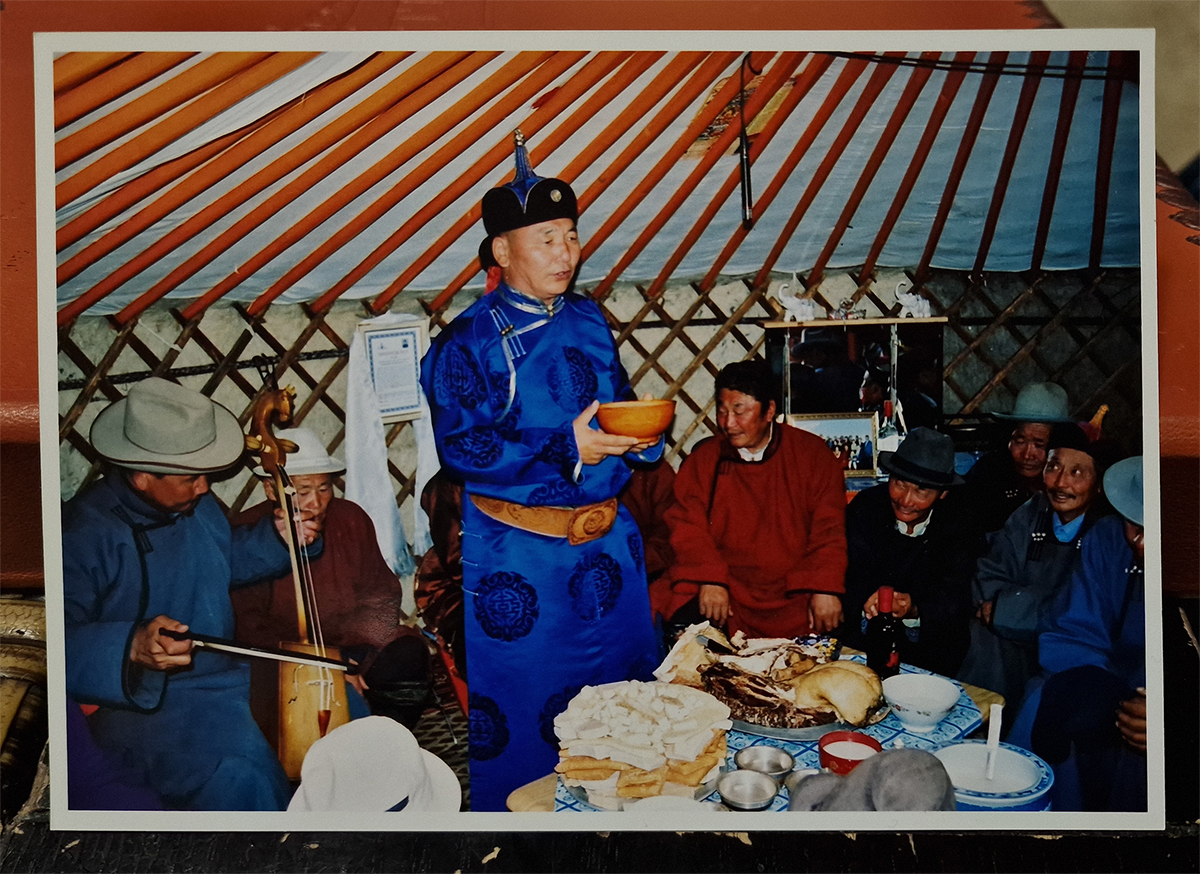
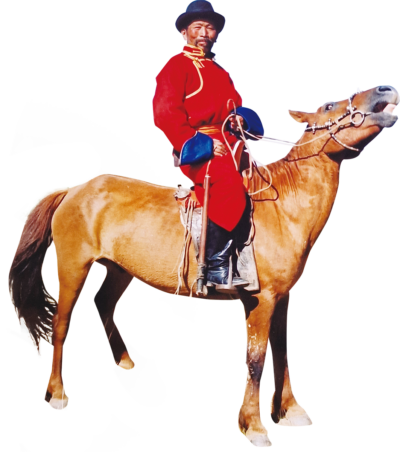
The traditional environment where this art originated among the people is the home of the Mongol economy, festivals, and ceremonies. Even better on horseback. The life of the nomad, the cultural space, gave a certain spirit to long songs and long singers, and saw a rich repertoire of songs develop and be passed down. Notable Mongolian artists such as N. Norovbanzad, the leading folk singer and actor of the twentieth century, and the poet Bavuu Lhagvasuren have spoken of the immeasurable beauty of long songs. Nowadays, people who have preserved the heritage of long songs in the local area and passed them down as a symbol of respect and honor are the singers of the feast. Dadisuren, a famous singer from Deren County, Dundgobi Province, is a good example of a representative of the long song performers.Greetings, Dadisuren. Could you please tell us a little about your life and experiences with long songs?
I was born in the year of sheep. My father, Nergui Shajin, a horse breeder and a singer, used to open festivities singing five state songs. My mother, Garam Lamchin, also a singer, used to recite tales, epics, and mantras in a melodic way. When I was 4 or 5 years old, I accompanied my father to festivities, listened to the melodies of the long songs and horsehead fiddles and acquired a taste for folklore and national customs. When I was 4 years old, I guess, I sang “Elegant and Fast Tawny Horse,” following my father, and listeners encouraged me and rewarded me with sweets. Old people from my homeland supported my talent and taught me their repertoire; they brought me up with a life full of songs. Long songs are the way to philosophy and history. My father taught me not to interrupt the song in the middle and articulate the words clearly. The “Sun of the Jambudwipa” song has four stanzas while the “Herlen Bariya” song has nine. Most songs have six stanzas. The “Grey-Brown Lark” song has thirty-six stanzas though, which makes it difficult for one performer to sing, so two or four performers sing it in turn or alternate. The “Old Man and Bird” song has thirty-two stanzas. Singing in alternate means the man and woman sing stanzas in turn, but the first and the last stanzas are performed together. My father and mother often sang in alternate.
Thank you for sharing your personal story. Are there any special characteristics of long song performance?
Songs performed at festivities have a voice accompaniment. As soon as the singer finishes singing a verse, all the participants call to each other and sing jargatugai (happiness) with great respect, and the melody is raised three times as if it were falling naturally. It is a magnificent and unique form. Singing along adds to the meaning of the song, and is designed to express the feelings of the party members. Its purpose is to evenly involve everyone in the party, to relax the lead singer, and to spread the melody of the song. A voice accompaniment is performed in the middle of a song without a verse and finished with the word “happiness”.
Are there any other interesting things that take place during song performances?
In my home county, at gatherings, we drink airag (fermented horse milk) and sing long songs. Those who did not contribute their voice accompaniment are punished by being made to drink from a big bowl of airag. These bowls have a capacity of 3 liters and more, but they are not offered to everyone—only those who severely breached the rules of the festivity, or repeated the same mistake. Once you receive this bowl, you have to finish its content without a rest. You can pause for a while holding it on your knee. Those who took this bowl more than once had no choice other than to learn to sing. If you sing incomplete songs or forget the verses, you can also be punished.That’s a fun game! Before we finish, do you have any more stories you want to share with the ICH Courier readers?
My home country is on the border of the former Borjigin Tsetsen Wang and Daichin Beis banners (administrative divisions). The two banners have different twists and tones of songs associated with them and I have learned both of these melodies at festivities. I never went to school, and my only higher education is the long songs. My profession is herding animals and singing long songs. I have spent all my life with my countrymen. For herdsmen, horses are the only animals that loosen us up and revitalize our spirits. Even when we are not riding or otherwise using horses, the sight of them makes us happy. If we do not ride horses, we do not sing. When you ride a horse, you should at least whistle a tune. It is very easy to learn long songs either at festivities or on horseback. You cannot learn it at the table or behind a glass window—it will be too artificial. Folklore is very much connected with a way of life. In particular, when you sing a long song on horseback on a moonlit night, you will experience true happiness.