People
Timor Aid’s Journey in Preserving Timor-Lester’s Tais Heirtage
Timor Aid’s Journey in Preserving Timor-Lester’s Tais Heirtage
Volume 60 · September 2024
Volume 60 · September 2024
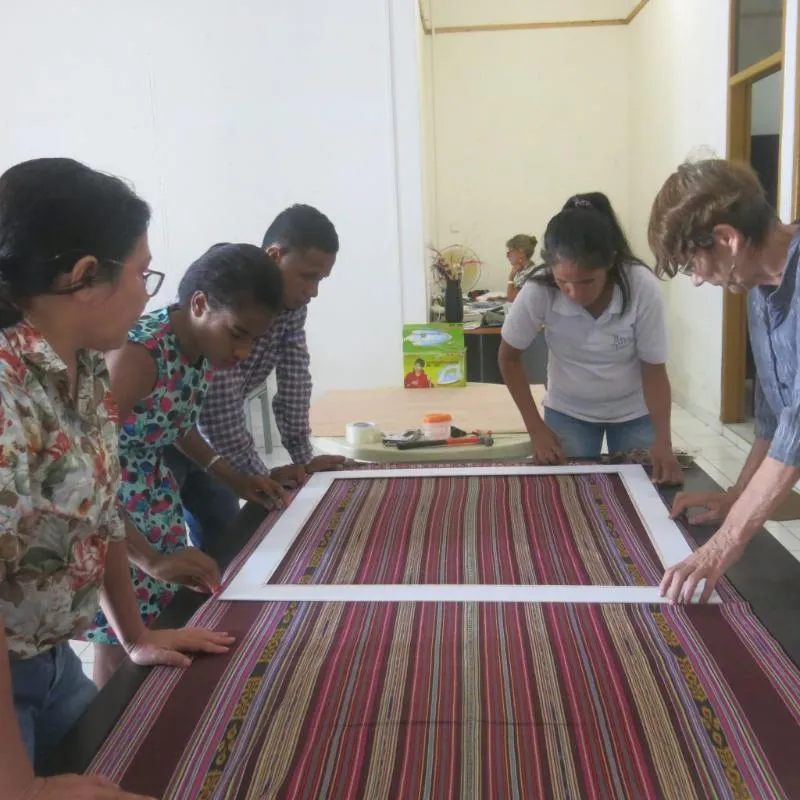
Timor Aid’s work in cultural preservation, specifically with tais (traditional woven textiles) and the development of the Tetum language, began in 2000 following the Popular Consultation under the auspices of the UN on August 30, 1999. Timor-Lester’s 24-year conflict, which culminated in over 200,000 deaths, as well as the destruction of 80% of the country’s infrastructure, compelled the founders of Timor Aid (TA) to contemplate deeply and strategically the organization’s role in the future development of Timor-Leste also known as East Timor. We aimed to focus on projects deeply embedded in the Timorese cultural identity to understand our roots, where we come from, and who we are in a modern, complex world. We envisioned a harmonious fusion of tradition and modernity, contributing to a balanced and sustainable lifestyle.
In protecting the weaving heritage and development of the Tetum language, our motivation was based on three guiding principles: spiritual, cultural, and fair economic values. These values are the guiding principles in our daily lives and are the fundamental roots of a healthy, vibrant, and fulfilled existence, including decent work and a viable workplace. Spiritual values are also human values and greatly influence people’s conduct. They give meaning and purpose to our lives and motivate and inspire us to achieve our fullest potential. Our cultural values are the core principles and ideals upon which our communities exist. Within the traditions of Timor-Leste’s ethno-linguistic communities, a thriving cultural diversity can be found. These customs, beliefs, and rituals define us, the people of Timor-Leste. They express our history, shape our present-day experiences, and influence our future. Economic values play a critical role in the daily decision-making processes vital to survival. We believe in socioeconomic values that support the common good and promote social justice. Tais symbolizes Timorese cultural identity, while the Tetum language unites the country’s diverse ethno-linguistic groups.
Timor Aid runs its cultural program in collaboration with various partner organizations to safeguard this invaluable cultural heritage and to empower the tais weavers of Timor-Leste. We are a member of the ICH Committee of Timor-Leste, and our partners in cultural preservation and rural women’s empowerment include the Secretary of State for Arts and Culture, Ambassadors Fund for Cultural Preservation (AFCP, US Embassy in Timor-Leste), UN Women, the National Committee of UNESCO in Timor-Leste, the Ministry of Tourism and Environment, and the Ministry of Trade and Industry. We have longstanding relationships with the weavers of Timor-Leste, continuously learning from each other.
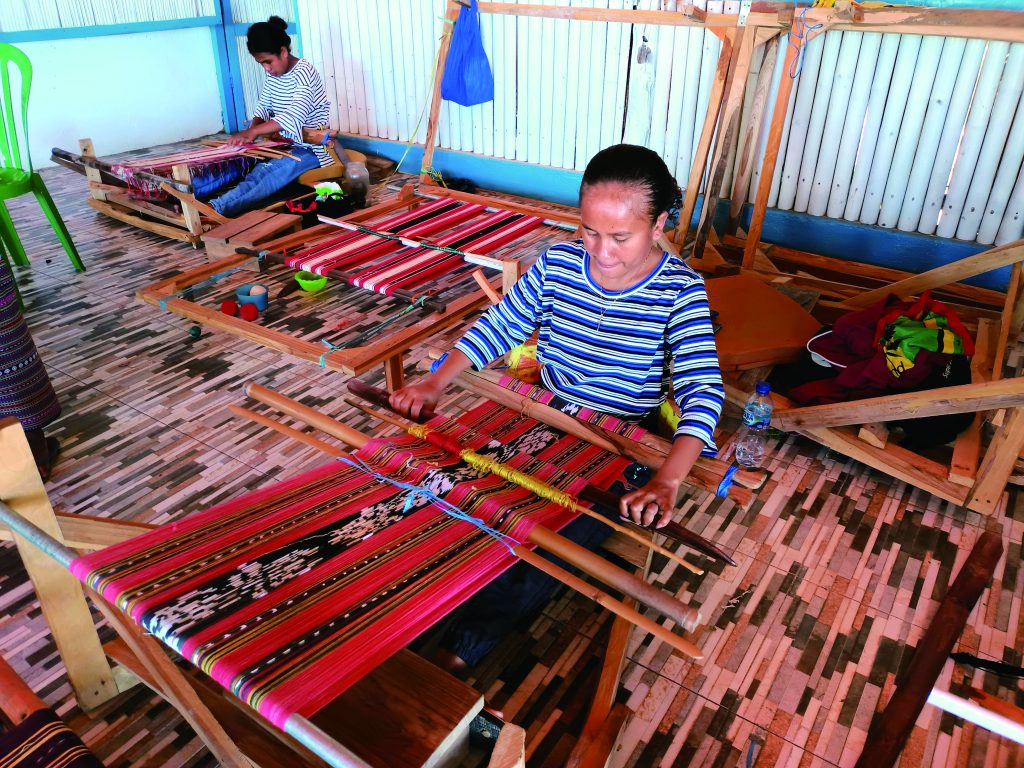
The sacred mission of Timor Aid is the preservation of tais, which was recognized as an intangible cultural heritage by UNESCO in December 2021. Tais continues to play a significant role in cultural lifecycle rituals and also found a place in the modern, currency-based markets of Timor-Leste. Tais weavers have inherited their weaving skills, generation after generation, from their ancestors. Weaving tais, an act of communion with ancestral memory, upholds the status and dignity of the weavers. Timorese ethnolinguistic communities identify themselves by the weaving techniques, motifs, and colors used, regardless of their place of birth or residence.
Our vision is to establish an integrated cultural center – Uma Tais (House of Tais) and Tais Museum – that will support, celebrate, and promote a deeper understanding of the cultural traditions of tais. For instance, Uma Tais will be a place to:
• Showcase, interpret, and safeguard a tais collection from the entire island of Timor, which is now divided into East and West Timor. The shared ancestral traditions of the communities along the border continue to this day, with regular cross-border cultural exchanges.
• Demonstrate the entire tais production process in a permanent, innovative exhibition.
• Strengthen the capacities of weaver groups by providing space, mentoring, and learning opportunities.
• Improve the livelihoods of weavers, particularly in rural communities.
• Discover, study, and research the tradition of tais weaving in Timor-Leste.
• Develop and expand cultural knowledge exchanges among stakeholders at all levels, including local community members, Timor Aid staff, domestic and international researchers, and cultural preservation specialists.
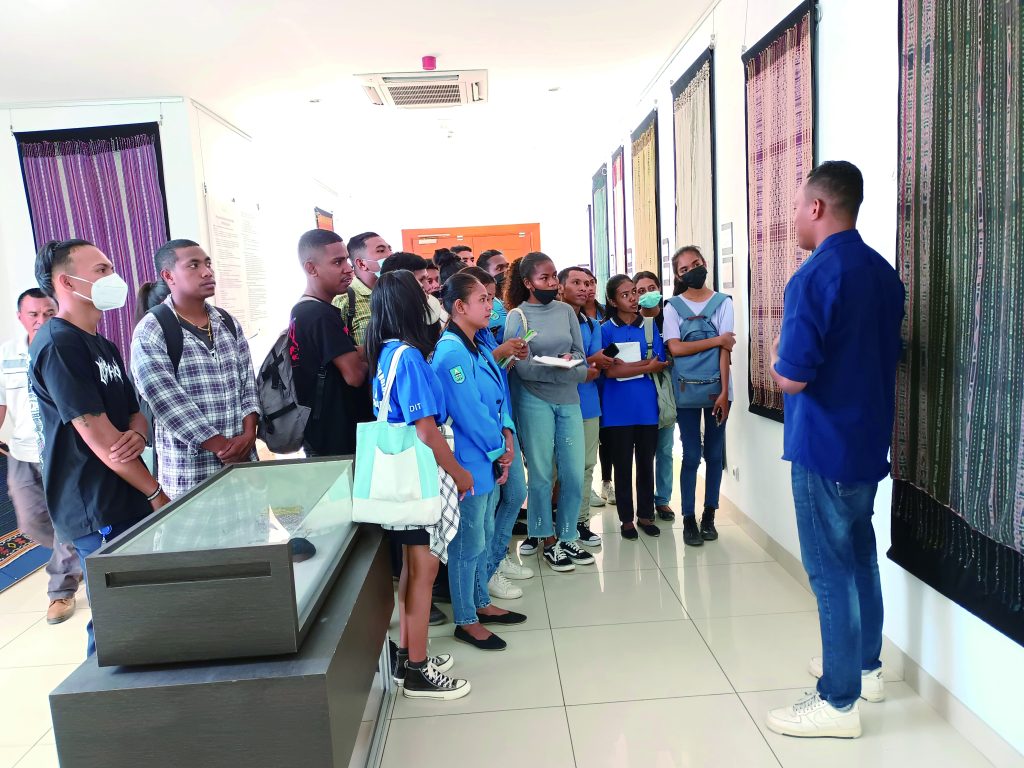
In April 2024, the authority of the Special Administrative Region Oecusse-Ambeno provided five hectares of land for the construction of the Tais Museum of Timor-Leste and its ecological system. This is essential for the sustainability of the preservation of tais. Timor Aid will be fully responsible for the operation of the Tais Museum, which will house and display Timor Aid’s tais collection, consisting of 400 pieces of traditional tais from 13 municipalities in Timor-Leste, as well as weaving equipment, materials, and related craft objects.
Timor Aid will expand its preservation efforts through the museum to include documentation of Uma Lulik (sacred houses) and their tangible and intangible cultural heritage.
We are running extensive research programs related to tais, with the collected data being accessible through printed publications, exhibitions (domestic and international), and soon our website. The Timor Aid website (https://build.timoraid.org) will feature a database of indigenous plants used for making tais and a comprehensive tais database, which will include data from Timor Aid’s tais collection as well as data we gathered during our field research and documenting efforts across Timor-Leste. These databases will be regularly updated and made freely accessible online.